
Marketplace vs Brand Store: Building a Conversion-Focused Image Strategy for Each Channel
Learn why marketplaces and brand stores need different image strategies, and how to operationalize both from one source workflow.
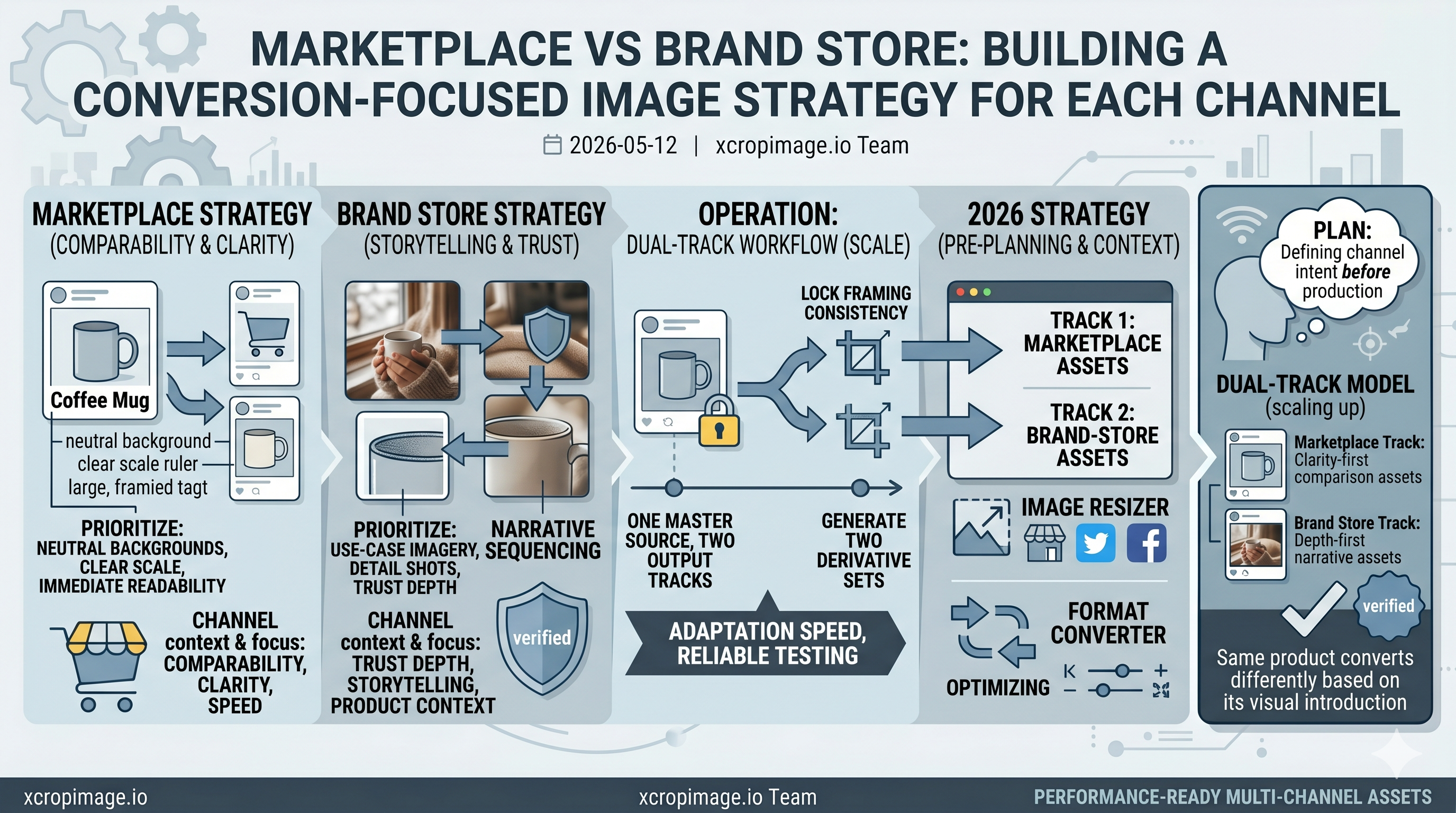
Shoppers behave differently on marketplaces versus brand-owned stores. Marketplaces reward speed, comparability, and clarity. Brand stores reward trust depth, storytelling, and product context.
Using one identical image set for both usually underperforms.
For marketplace listings, prioritize neutral backgrounds, clear scale, and immediate readability. For your own store, add detail shots, use-case imagery, and narrative sequencing. This e-commerce product photo guide is a useful implementation baseline.
Operationally, generate two derivative sets from one master source. Lock framing consistency with the image cropper, output channel-specific dimensions through the image resizer, and optimize delivery with the format converter.
Channel-specific visual strategy is not duplication; it is context optimization. The same product can convert differently based on where and how it is visually introduced.
2026 Channel Architecture Update
Marketplaces increasingly reward clarity-first assets, while brand-owned stores benefit from depth-first narratives. That means pre-production planning should define channel intent before image production starts.
How to Operationalize at Scale
Generate two output tracks from one master source: comparison-focused marketplace assets and story-focused brand-store assets. This dual-track model improves adaptation speed and makes performance testing far more reliable.