
Visual Localization Strategy for Multilingual Markets: When to Adapt the Same Creative
Decide when to localize visuals across markets and when to keep a shared creative, using a practical framework for global teams.
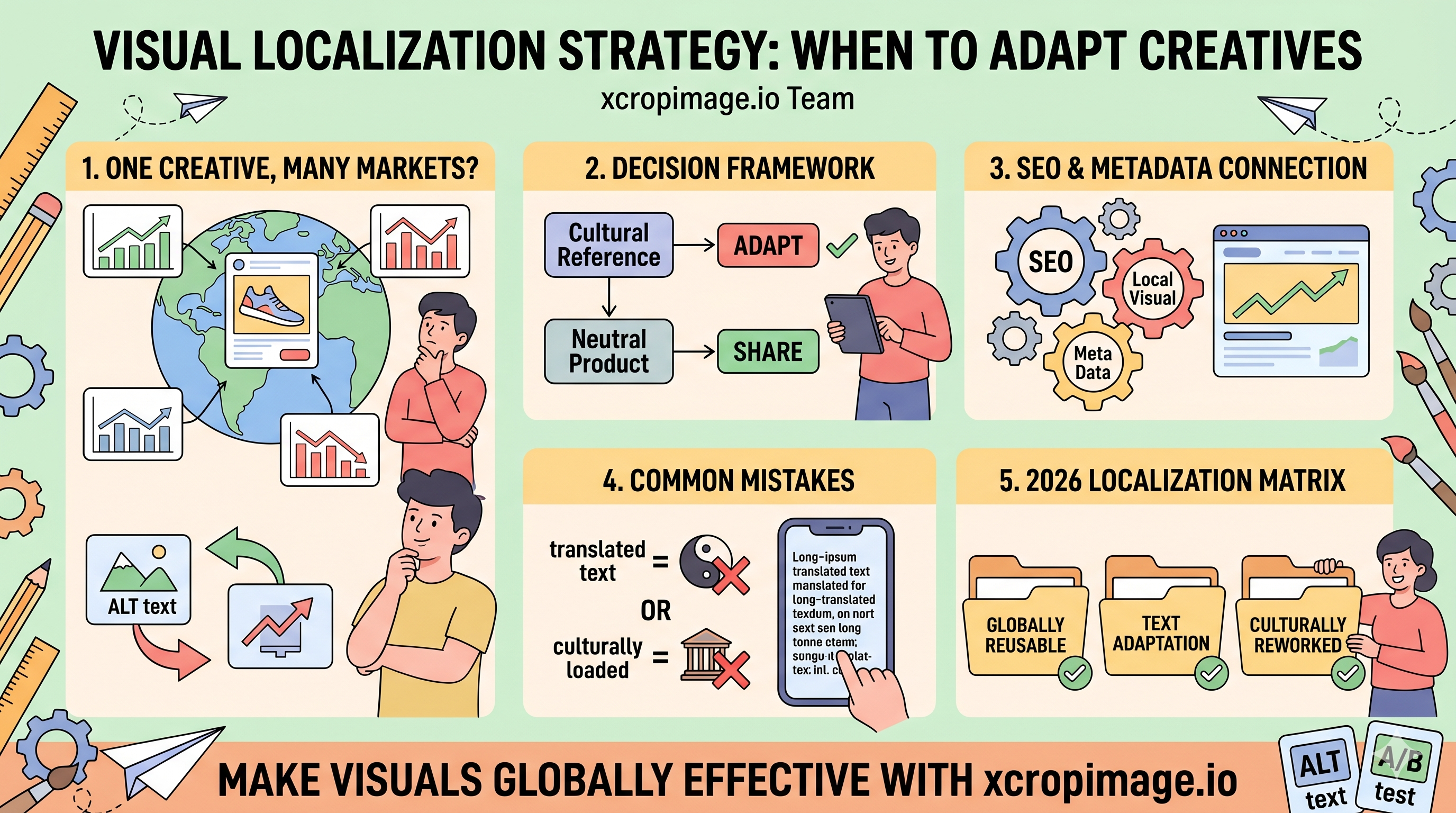
One Creative, Many Markets?
Using a single visual asset globally is efficient, but not always effective. Color meaning, symbolism, social context, and text rhythm vary by region. A campaign that performs in one market can underperform in another without obvious technical errors.
A Practical Decision Framework
Localize visuals when your message includes cultural references, emotion-heavy language, or market-specific constraints. Keep shared creatives for neutral, product-first communication with minimal text overlays.
Because text length changes by language, test composition and safe zones early. Use the image cropper for framing validation and export placement-specific versions through the image resizer.
SEO and Localization Should Be Connected
Localized pages should include localized visuals and metadata. Mismatched language signals can weaken relevance over time. For supporting setup, connect with social media image dimensions and Open Graph preview debugging.
Final Recommendation
Don’t localize everything. Localize what changes interpretation. Small, targeted visual adaptations often deliver stronger engagement than full redesigns, while keeping production scalable.
2026 Localization Decision Matrix
High-efficiency teams classify assets into three buckets: globally reusable, text-adaptation required, and culturally reworked. This reduces unnecessary redesign while protecting performance in sensitive markets.
Common Mistakes to Avoid
The most frequent mistake is translating copy but keeping culturally loaded symbols unchanged. Another is publishing before testing region-specific crop behavior and preview layouts. A third is leaving metadata in the source language, which weakens local relevance signals.