
Reduce Product Returns With Expectation-Reality Aligned Photo Language
Learn how to align product visuals with real customer expectations to reduce return rates and improve trust.
The Real Cause Behind Many Returns
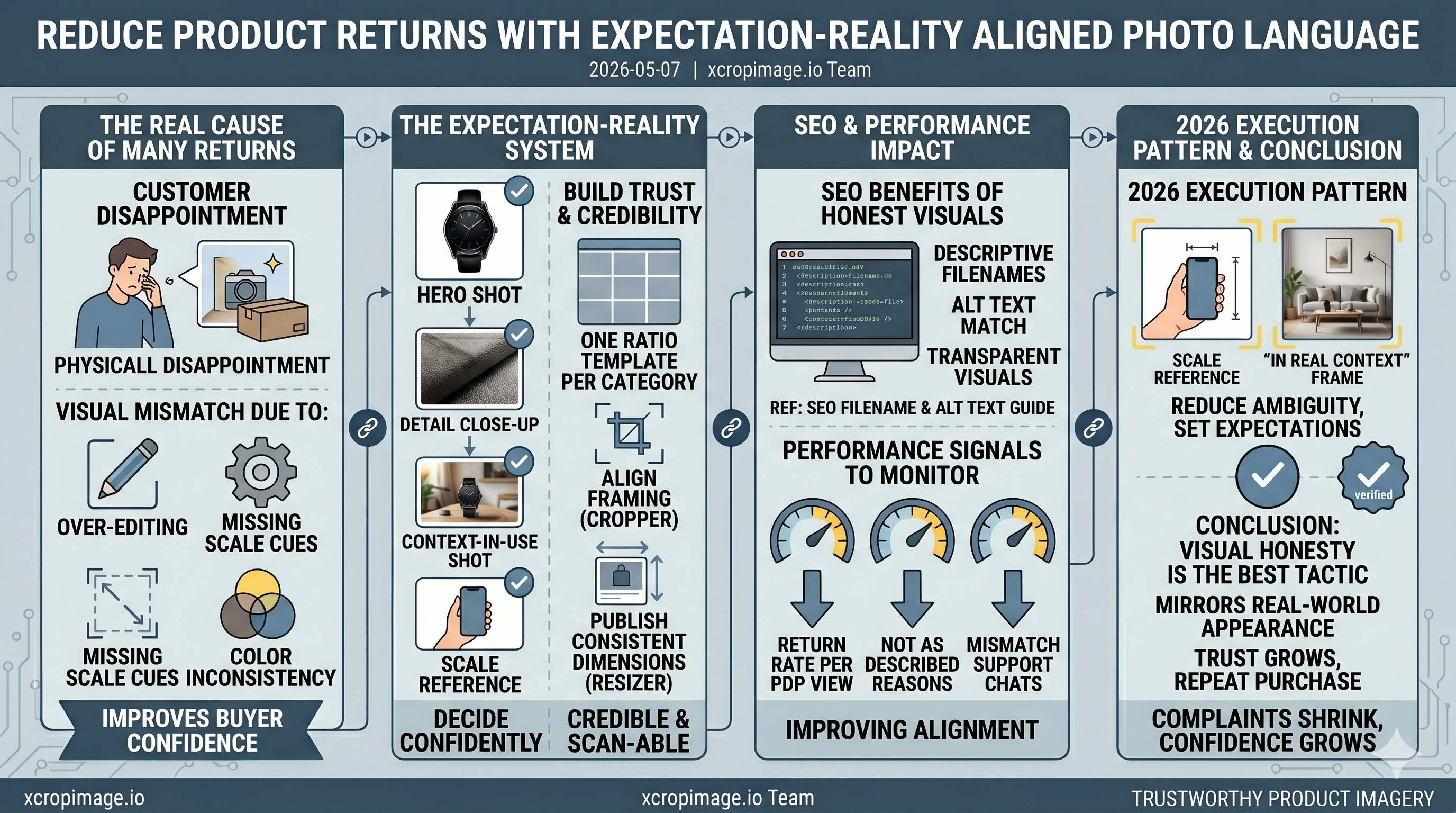
Many returns happen because customers feel the delivered item does not match what they saw. In most cases, the issue is visual framing, not product quality: over-editing, missing scale cues, and inconsistent color presentation.
Build an Expectation-Reality System
Use a repeatable image sequence: hero shot, detail close-up, context-in-use shot, and scale reference. This gives buyers enough visual evidence to decide confidently. For color fidelity practices, pair this with product image consistency guidance.
Standardize Asset Production
Create one ratio template per category and enforce it across all SKUs. Teams can align framing with the image cropper and publish consistent dimensions via the image resizer.
Consistency makes catalogs easier to scan and more credible.
SEO Impact of Honest Visuals
Transparent visuals also improve search quality signals when metadata is consistent. Use descriptive file names and alt text that match the actual image content. The SEO filename and alt text guide is a strong implementation checklist.
Conclusion
The best return-reduction tactic is not persuasive copy; it is visual honesty. When product imagery mirrors real-world appearance, trust grows, complaints shrink, and repeat purchase potential improves.
2026 Execution Pattern
Teams with lower return rates are standardizing two high-impact assets: scale reference visuals and "in real context" usage frames. These assets reduce ambiguity and set practical expectations before checkout.
Performance Signals to Monitor
Measure return rate per PDP view, "not as described" return reason share, and support chats triggered by visual mismatch. If these indicators decline after visual system updates, your expectation-reality alignment is improving in the right direction.