
Competitor visual audits: positioning, offers, and ethical boundaries
Learn from public PDPs and campaigns without copying assets—spot gaps and differentiate ethically.
Introduction
Competitor product pages and campaigns are public, but copying photography, infographics, or distinctive layouts crosses legal and ethical lines. A visual audit should answer: What does the market expect? Where are we weak?—then translate answers into your brand voice and original assets.
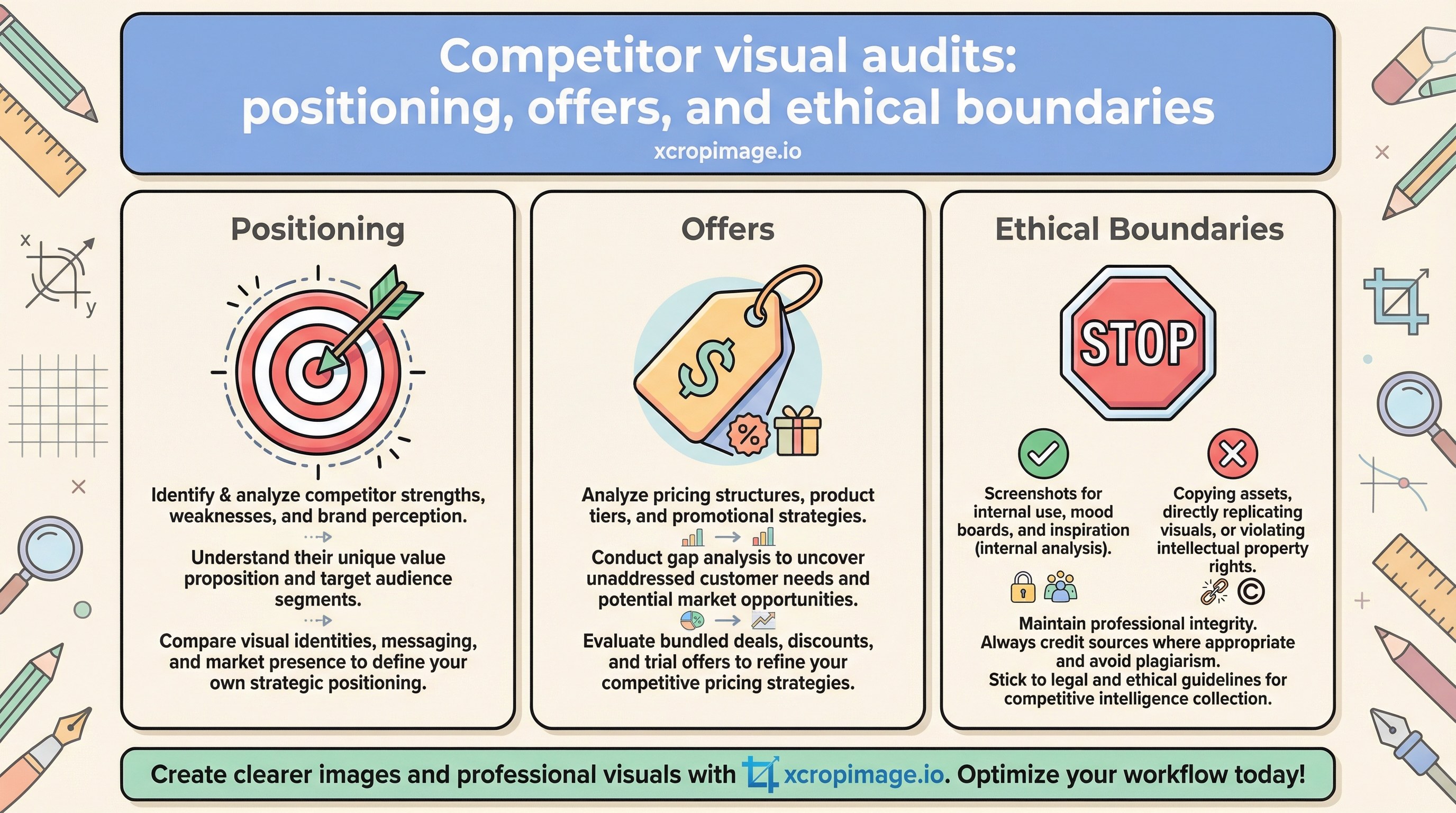
Earlier in this series: Email without images · Category consistency · Brand identity.
What to study (without cloning)
- Information hierarchy: How many images per PDP, what is above the fold, how zoom works.
- Trust signals: certifications, comparison tables, lifestyle versus packshot balance.
- Category norms: if everyone uses white backgrounds, deviation may help—or hurt—depending on positioning.
Capture screenshots for internal research only; do not reuse competitor art in your storefront.
Ethical guardrails

- Screenshots for internal notes are fine—don’t ship clones or “close enough” copies.
- Automated scraping of prices, inventory, or media at scale can carry legal and platform ToS risk—stay within professional norms and seek counsel when unsure. US teams often reference high-level FTC competition guidance as context, not as a substitute for legal advice.
Turn insights into action
Translate patterns into your guidelines: background rules, crop templates, and messaging. Validate with A/B tests rather than guessing.
Turkish parallel
For the same topic in Turkish, see Rakip vitrin analizi: etik çerçeve.
Conclusion
The goal is differentiation with integrity. The next post in this series covers campaign visuals versus brand guidelines—campaign exceptions.